About Foot Switch
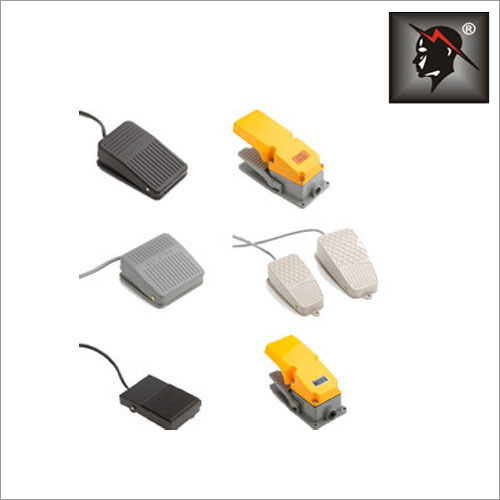
By keeping in mind variegated requirements of our valuable customers, we bring forth an excellent array of Foot Switch. Available in different specifications, this switch is widely used to operate machines or devices. Foot Switch is technically advanced, fluent in operation and best in quality. This switch generally used to either make or break an electrical circuit.
Product Details:
| Frequency Bands |
50-60 Hz |
| Usage/Application |
Industrial |
| Switch Type |
Foot Switch |
| Current Rating |
5-50A |
| Brand |
Indo Power |
| Switch Operation |
Automatic |
| Material |
Plastic |
Robust Design for Industrial EfficiencyWith its sturdy plastic construction and vibrant yellow color, this foot switch is engineered for demanding industrial settings. The rectangular shape and single-pedal design facilitate effortless operation, while the bottom cable entry streamlines installation. Paired with an SPDT contact mechanism and broad current range (5-50A), it accommodates heavy-duty applications, ensuring consistent performance and operator safety in manufacturing plants and workshops.
Versatile Applications Across IndustriesThis foot switch is suitable for controlling machinery in sectors such as metalworking, textiles, and automation. Its automatic operation and high current capacity make it particularly advantageous in processes that require hands-free control, reducing fatigue and enhancing workflow. As it is offered by multiple trusted suppliers across India, businesses can easily integrate this component into new or existing systems to modernize their operations.
FAQ's of Foot Switch:
Q: How is the foot switch installed in industrial equipment?
A: The foot switch features a bottom-side cable entry for straightforward wiring and integration into industrial systems. Installation typically involves connecting the switch as per the SPDT contact configuration, aligning its single pedal for convenient operator access, and securing it on the factory floor using designated mounting points.
Q: What benefits does an automatic single-pedal foot switch provide for operators?
A: An automatic single-pedal design allows operators to control machinery with minimal effort, freeing up their hands for other tasks. This streamlines workflow, reduces operator fatigue, and enhances workplace safety by ensuring quick machine activation or shutdown when needed.
Q: When should a foot switch with a 5-50A current rating be used?
A: This foot switch is ideal in industrial scenarios where the connected machinery or load requires a current range between 5 and 50 amperes. It is suitable for operating heavy-duty equipment or devices that demand higher current-carrying capacity, ensuring reliable performance and protection against overload.
Q: Where can I source this industrial foot switch in India?
A: You can purchase this foot switch from authorized suppliers, wholesalers, and traders specializing in industrial automation components across India. Many providers offer nationwide shipping and technical support for seamless procurement and installation.
Q: What is the process of using this foot switch in an industrial setting?
A: Usage involves wiring the switch according to the SPDT contact mechanism, then positioning it near the workspace. Operators simply press the yellow pedal to activate or control connected machinery automatically, enabling both ease of use and swift machine response during operations.
Q: How does the yellow rectangular body design enhance workplace safety?
A: The vibrant yellow plastic casing increases visibility, making the foot switch easily noticeable on busy factory floors, which helps prevent accidental tripping or missteps. Its robust rectangular shape provides stability, contributing to safe and reliable operation under heavy industrial usage.
Q: What materials are used for this foot switch, and how do they affect durability?
A: Constructed from high-quality plastic, the foot switch offers excellent electrical insulation and resistance to wear. This material choice supports long-term durability in challenging industrial environments, ensuring consistent functionality and reducing the frequency of maintenance or replacement.

 Send Inquiry



 Send Inquiry

 Send Inquiry